For most of the 2010s, traction was how you measured whether a tech product would make money.
It didn’t really matter what the product was. The playbook was the same across consumer tech, social platforms, and SaaS: get users first, figure out money later. And for a long time, this worked.
You build your infrastructure once and serve all your users.
As usage grows, the costs per user go to zero. At the same time, gross margins improve and often reach 90%. So the cost of serving one more user is effectively zero. This is what economists call zero marginal cost.
Then AI came along and broke that.
AI just doesn’t work that way because it runs on capital-intensive infrastructure — massive amounts of GPUs and memory. Every user incurs a real marginal cost. The more users engage, the higher the costs. So adding more users doesn’t automatically mean more money. Even worse, you may end up losing money on every single user you serve.
This is the most important shift in technology economics in the last two decades.
Why is that?
Because the AI market is separating into two groups:
- Those who build commercial validation into their product operating model from day one, and…
- Those who don’t—and die with great traction.
The distinction that matters most:
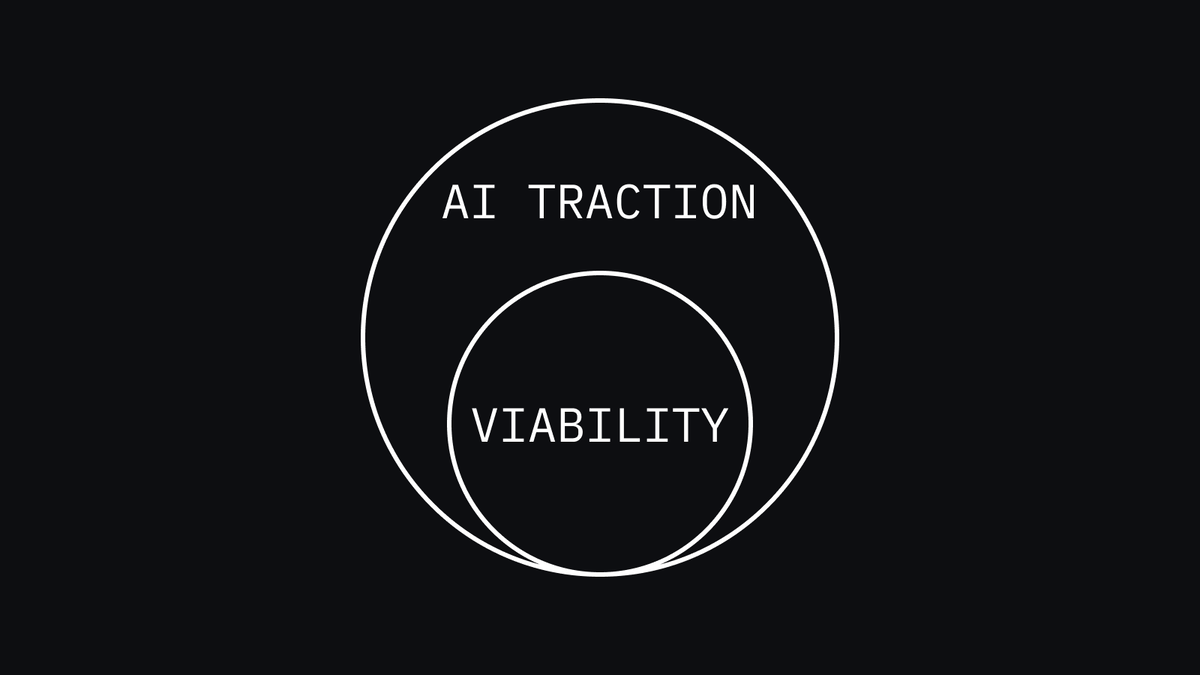
Traction is evidence the product is being used, not evidence the business works.
The AI product companies that get this right know what it costs to serve a customer, what the customer is willing to pay, and why the numbers work. That clarity is what lets them reinvest, reprice, and scale without a runway issue.
This sounds like Product 101. But I’ve built AI products in an enterprise and at a Series B startup, and had this conversation with AI founders and product leaders alike. The confusion between traction and viability is real.
Before we get into why this keeps happening, let’s name the mistakes I keep seeing.
- You treat traction signals as proof the business is working. Active users are up, deals are closing, features are shipping. So the numbers must mean something, right?
- You read market signals as validation of the business model. Funding is flowing, the category is growing, competitors are active. It’s easy to think: if everyone’s betting this way, the economics will sort themselves out.
- You put off commercial validation to a future planning cycle. There’s always a reason to wait: “The product isn’t mature enough yet”, “The team doesn’t have bandwidth.”, or “The traction isn’t quite there.” So you wait. And wait.
What makes all three feel reasonable is a shared belief underneath: AI products will follow the same commercial trajectory as SaaS. Just give them enough scale, and the numbers will sort themselves out.
They don’t.
Instead, you run out of runway with a strong usage chart and no clear path to profitability. And as you put off the commercial conversation, you train customers to expect more for less. This in turn locks in a price anchor the business cannot sustain.
The investment climate makes it worse. Investors are still funding growth over margin. This only adds to the pressure to put off the commercial conversation.
The honest version of this is harder to say:
Most AI founders and product leaders know the difference between traction and viability. But nothing punishes them for it — not yet. The board celebrates the logo customer. Their boss asks about active users. Investors fund growth.
What gets rewarded, gets done.
Now let’s walk through the five reasons this keeps happening, and what to do about each.
Reason 1: Viability has no clear owner
If product, finance, and sales each have a dashboard, then whose dashboard shows whether the AI product is viable?
The assumption is that someone owns viability. From my experience, this is not true. Viability consistently sits between product, finance, and sales. When three functions share responsibility, each assumes the other two are handling it. Psychologists call this diffusion of responsibility. The rest of us call it hope.
But hope is not a strategy.
The fix is straightforward: assign viability to one person or function.
In early stage companies, that’s typically the founder. At growth stage companies, that’s the CPO. The CPO needs one thing from the CEO to make this stick: air cover when unit economics are bad and the growth chart is good. Without it, the commercial conversation gets killed the first time it conflicts with the board narrative.
But there’s a reason this fix sounds easier than it is. Owning viability means owning bad news. Nobody volunteers to be the messenger who gets shot.
That’s why you don’t ask for volunteers. You embed viability where the work already happens.
The product teams are closest to customers and the market, and should run commercial validation on a day-to-day basis anyway. So give them the tools and the autonomy. Start by defining three numbers: cost to serve per customer, gross margin per customer, and current pricing against both. That becomes the quarterly baseline.
When ownership is clear, every new customer makes the business stronger.
Reason 2: Wrong incentives drive departmental misalignment
It’s no secret that in most organizations, sales optimizes for deals closed and product optimizes for features shipped or product outcomes achieved.
Neither department is particularly rewarded for talking to each other or agreeing on the right product metrics. Traction metrics fill that gap. Active users, deals closed, features shipped… everyone has them, everyone understands them.
So they become the default measure of success.
Of course this approach creates a blind spot.
Incentives determine what gets prioritized and what gets ignored. If every department hits its targets, the assumption is that the business is on track. But in AI products, each department can hit its numbers while the unit economics worsen under the hood. Sales closes deals that are unprofitable to serve. Product ships features that increase compute without increasing revenue.
The fix is a shared commercial metric visible to product, sales, and finance: cost to serve, margin per customer, or contribution margin per usage event. Make it a standing item in cross-department reviews. The hard part is not the metric. It is getting Sales and Finance to care about a number that does not appear in their comp plans.
When the whole organization measures the same thing, it pulls toward the same commercial outcome.
Reason 3: Teams still use the old SaaS scoreboard
At some point between 2010 and 2020, “active users” became the default answer to the question “is this working?”.
It was the SaaS scoreboard, and it worked. Some teams embraced AI right from the start, while many others are still coming to terms with the technology and its implications. Either way, the operating model required the same premise. Adoption and engagement would lead to monetization: that was the default playbook, and nothing in the day-to-day workflow challenged it. That’s not wrong, but AI made that path significantly harder.
Remember, active users can grow while unit economics worsen.
Sticking to the old premise can look like success, until the burn becomes unsustainable. By then, the AI product isn’t viable. You need to be ruthless about this with your teams: have them define viability by unit economics, margin per customer, and cost to serve.
Make sure that they measure these metrics separately from traction signals.
Reason 4: Viability gets checked once and forgotten
This follows from the previous three reasons.
When viability has no clear owner and incentives are not aligned, it gets confirmed once and rarely again. All while your product evolves, your market evolves, and your customer evolves. Even worse, AI evolves faster than all three. What you shipped six months ago may no longer reflect what it costs to serve customers, or what you can charge.
It should be clear by now that viability is not a gate to pass through.
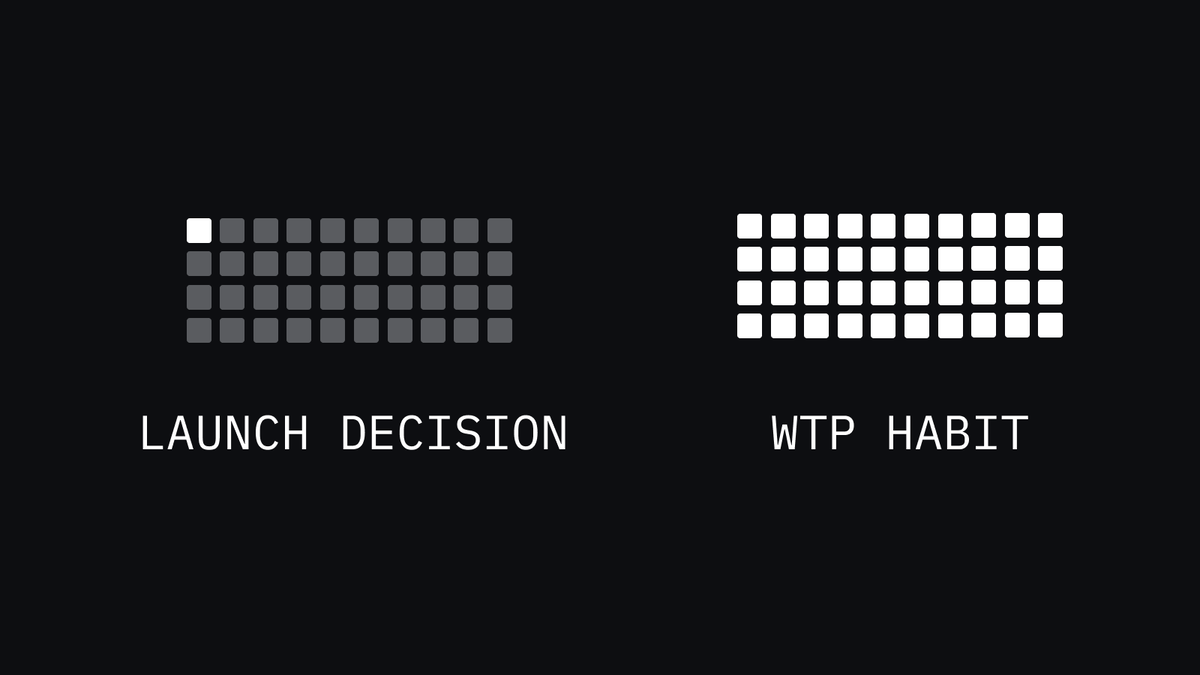
It’s a continuous habit that you need to maintain. So make viability a standing topic in your regular planning or review cadence. If Finance and Sales are not in that cadence, the review has no teeth. Get them in the room or take the output to them directly. Track the unit economics, costs, and margins as discussed and make sure the pricing model still fits your current situation.
This allows you to adjust prices before contracts lock you in and to hold margins as usage scales.
Reason 5: Commercial validation is not part of the workflow
The product community has been obsessed with AI tooling — and how it changes the work of PMs, engineers, and designers.
But who is asking whether the team can validate the AI product’s business model?
Commercial validation is a foundational product skill.
It requires deliberate practice and an environment that makes it routine. Commercial validation including willingness to pay, unit economics, pricing model fit is a distinct practice from user research. Many teams have a workflow for the latter and nothing for the former.
The fix: introduce commercial validation as a distinct practice alongside product discovery (and make sure the teams have the bandwidth to do so).
Willingness to pay, unit economics, pricing model fit are questions product needs to answer before it ships features. Madhavan Ramanujam puts the consequence plainly: 20% of what you build drives 80% of willingness to pay. Before scope is set, ask customers one question: which of these capabilities would make you willing to pay more? Without this practice, that 20% ships almost for free.
Don’t give away the farm unintentionally.
That’s it.
Chat soon, Hayder